
The Singapore Gold Rush: Why Chinese F&B Brands Are Rewriting Southeast Asia's Retail Playbook
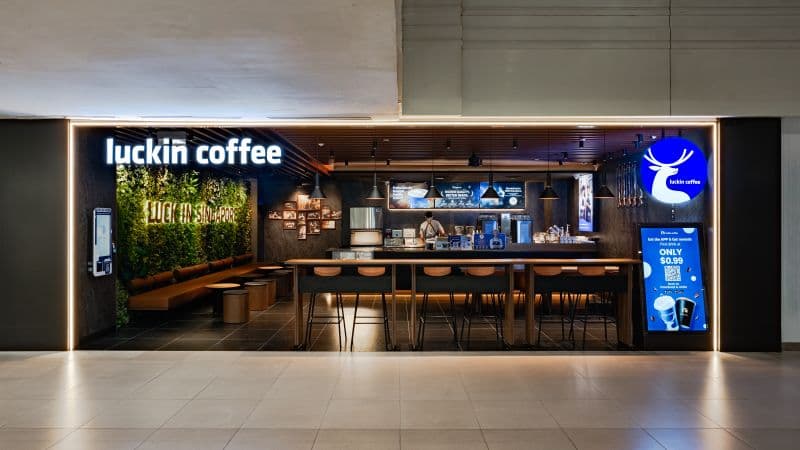
Walk through any major shopping mall in Singapore today, and you will spot a pattern that barely existed five years ago. Mixue's snowy mascot grins from a corner kiosk where a local dessert shop used to stand. Luckin Coffee's blue-and-white cups appear in the hands of office workers queueing at Orchard Road. Haidilao's signature hotpot aroma wafts from a vast dining floor that was once a Japanese restaurant. The great Chinese F&B migration has arrived on Singapore's shores — and it is fundamentally reshaping the city-state's retail landscape.
The numbers are staggering. Since 2022, more than 30 major Chinese F&B chains have opened their first overseas outlets in Singapore. Tea franchise Mixue alone has launched over a dozen locations across the island. Luckin Coffee — China's answer to Starbucks with over 20,000 mainland stores — chose Singapore as its first international market. Hotpot giant Haidilao now operates more than 20 outlets in Singapore, making it one of the brand's most concentrated overseas markets. Manner Coffee, Nayuki Tea, and dozens of lesser-known regional brands have followed suit, converting Singapore into an accidental laboratory for Chinese F&B globalisation.

xTrack Dome
Real-time queue analytics and customer flow insights for multi-location F&B chains
Learn More →Why Singapore? The answer lies in a convergence of factors unique to the city-state. Singapore's sophisticated retail infrastructure — world-class malls, high footfall corridors, and a population with significant disposable income — provides the ideal proving ground. The country's bilingual environment and cultural familiarity mean Chinese brands can test their service models without the full shock of entering a Western market. Crucially, Singapore's reputation as Southeast Asia's gateway city means success here unlocks a halo effect across Malaysia, Indonesia, Thailand, and Vietnam, where Chinese brands are eagerly watched.
For local F&B operators, the influx creates both threat and opportunity. On one hand, competition for prime retail space in locations like Orchard Road, Marina Bay, and suburban regional malls has intensified dramatically. Rental premiums for high-traffic F&B lots have risen 15–25% since 2023, driven in large part by well-capitalised Chinese entrants willing to pay top dollar for brand visibility. On the other hand, the influx has raised the bar for service standards, digital ordering, and operational efficiency across the entire sector.
These Chinese brands bring something their local counterparts often lack: operational playbooks refined across thousands of locations in China's hyper-competitive domestic market. Haidilao's legendary customer service system, Mixue's supply-chain-driven pricing model, and Luckin's app-first ordering experience were all forged in the crucible of China's cutthroat F&B landscape. When these brands land in Singapore, they arrive with SOPs, training systems, and technology stacks that have been stress-tested at massive scale.
The operational demands, however, are formidable. Running 10, 20, or 50 locations across Singapore's compact but densely populated geography requires real-time visibility into every store's performance. Queue length, table turnover, staff allocation, kitchen throughput, and equipment health must all be monitored simultaneously. When a digital ordering kiosk goes down during lunch rush, or a POS terminal loses connectivity during the dinner peak, every minute of downtime directly impacts the bottom line.
This is where intelligent IoT management becomes a strategic advantage rather than a back-office afterthought. xRetails' xPilot platform provides the unified connectivity infrastructure that multi-location F&B chains need to operate at scale. By deploying xPilot edge gateways at each outlet, brands gain centralised visibility into every connected device — POS terminals, digital menu boards, ordering kiosks, kitchen display systems — across all locations from a single Vortex Cloud dashboard. Proactive 5G failover ensures that when the primary broadband drops, the store stays online in under three seconds, invisible to staff and customers alike.
Combined with xTrack's AI-powered shopper analytics, F&B operators can move beyond reactive management to predictive optimisation. Real-time queue-length monitoring alerts managers before lines grow beyond acceptable thresholds. Footfall heatmaps reveal which seating zones are underutilised. Dwell-time analytics correlate wait durations with ordering behaviour, enabling data-driven decisions about staffing, layout, and promotional timing. For chains expanding rapidly — exactly the situation Chinese brands face in Singapore — this operational intelligence is not a luxury; it is the difference between profitable growth and scaling chaos.
The Chinese F&B wave in Singapore shows no signs of slowing. With every new outlet opening, the bar for operational excellence rises for everyone. The brands that will thrive in this new competitive landscape are not necessarily the ones with the deepest pockets, but the ones with the sharpest operational data. In the battle for Singapore's dining dollars, the winners will be those who see every queue, every table turnover, and every footfall — and act on that intelligence in real time.
Related Articles
Continue exploring insights from xRetails



Ready to Transform Your Retail Operations?
Discover how xRetails\' AI-powered IoT management and shopper analytics platforms can help your business reduce costs, increase revenue, and stay ahead of the competition.
Contact Our Team