
AI Camera Revolution in Singapore Retail: From Surveillance to Full Shopper Intelligence
For decades, the camera in a retail store had one job: security. A grainy CCTV feed looped onto a monitor in a back office, recording footage that was only ever watched after something went wrong. In Singapore, where retail density is among the highest in Asia and labour costs continue to rise, that approach has become an expensive missed opportunity. Today, the in-store camera has been completely reinvented from a passive recording device into an active intelligence sensor, capable of understanding who walks in, how they move, what they engage with, and whether they convert to a sale — all without ever sending a single video frame to the cloud.
This shift is already underway across Singapore retail, and forward-looking chains are already benefiting from it.
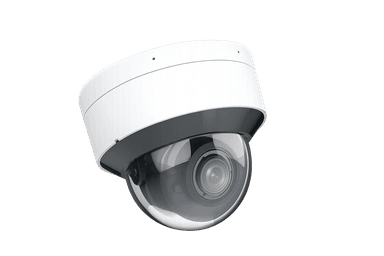
xTrack
AI shopper intelligence for footfall, heatmaps, demographics, and conversion visibility
Learn More →First Generation: CCTV, the Security-Era Camera
The journey begins with analog closed-circuit television (CCTV). Installed in stores from the 1980s onward, these cameras served a single purpose: loss prevention. Footage was recorded to VHS tapes or DVRs, reviewed manually after an incident, and offered zero actionable data about shoppers.
The limitations were profound. CCTV was purely reactive. A retailer could see that a theft occurred, but could not learn anything about customer behaviour patterns, traffic flow, or conversion rates. The camera was a witness, not an analyst. And with no digital processing on-site, extracting any insight required a human to sit and watch hours of tape. This model dominated retail for nearly three decades — a period during which Singapore stores, like their global counterparts, captured everything but revealed almost nothing useful for business decisions.
Second Generation: People Counters, the Counting-Era Sensor
The early 2000s brought the first attempt to extract data from cameras: the people counter. These systems used beam-break sensors (infrared beams across doorways) or basic thermal sensors to register when a person entered or exited a store. For Singapore shopping malls and chain stores, this was a meaningful first step. Operators could finally compare foot traffic across outlets at Orchard Road, Marina Bay, and heartland locations.
But these counters still faced fundamental limitations. They could not distinguish a shopper from a staff member, could not tell a first-time visitor from a returning customer, and could not track movement beyond the entry point. They answered "how many" but never "who," "where," or "why." For a Singapore retailer running multiple locations across different catchment areas — from high-traffic tourist zones to residential heartland malls — that gap meant store managers still relied on intuition for staffing, layout, and promotion decisions. The counting era was a step forward, but it stopped far short of intelligence.
Third Generation: AI Edge Cameras, the Intelligence Revolution
The breakthrough came with the convergence of three technologies: high-resolution CMOS sensors, powerful low-cost edge processors, and deep learning computer vision algorithms. Today's AI edge cameras represent a complete architectural shift.
Instead of sending raw video to a central server or the cloud for processing, these cameras run neural network models directly on the device. The camera itself is the computer. It processes every frame in real time, extracts meaningful data, and transmits only anonymised metadata — a timestamp, a trajectory vector, a demographic classification — to the cloud dashboard. The video never leaves the camera. In Singapore, where the Personal Data Protection Act (PDPA) imposes strict data governance requirements on retailers, this architectural choice is particularly significant.
How does this change what a Singapore retailer can know?
Re-identification without Facial Recognition
Using appearance-based ReID (Re-Identification), AI cameras can recognise that the same shopper has returned to the store on multiple visits based on clothing colour, height, gait, and other non-biometric attributes. No face is stored or transmitted. Privacy is preserved, while loyalty insights are unlocked.
Beyond Counting: Understanding Journey
A modern AI camera does not just count a shopper at the door. It tracks that shopper through a journey: passing the storefront, entering the store, pausing at a display, walking down an aisle, approaching a shelf, spending time in a zone, approaching the checkout counter, and exiting. Each event is timestamped and logged, building a complete behaviour trail across the store journey.
Heatmaps and Zone Analytics
By dividing the store floor into virtual zones, AI cameras generate heatmaps showing where shoppers congregate and where they avoid. A Singapore fashion retailer in a heartland mall can see that a promotional endcap draws traffic for three seconds while a fitting room area holds shoppers for eleven minutes — and reconfigure the layout accordingly.
Demographics at a Glance
On-device models can classify the approximate age group and gender of shoppers without storing any facial data. A store manager in a mixed-catchment location can see that their afternoon foot traffic skews younger while the evening crowd is predominantly families — and adjust staffing, music, and product placement to match the demographic pattern.
Queue and Service Detection
AI cameras detect when checkout lines grow beyond a configurable threshold, alerting staff in real time to open another register. In high-volume Singapore retail environments where lunch-hour and post-work rushes are predictable but intensity varies, this capability directly protects conversion rates.
Passersby versus Entrants
Perhaps the most valuable metric for brick-and-mortar: the conversion funnel. An AI camera at the storefront counts passersby (total foot traffic past the store), entries (who actually walks in), and purchases (via integration with the POS). The retailer suddenly has a true conversion rate — passersby-to-entry and entry-to-purchase — mirroring the precision of online analytics in a physical environment.
The Infrastructure That Makes It Real
An AI camera is powerful on its own, but for a chain operating across Singapore's diverse retail landscape — from Marina Bay luxury flagships to HDB heartland malls — the real value comes from aggregation and real-time action across all locations.
This is where the store IoT infrastructure comes in. A gateway such as xPilot connects in-store AI cameras to the Vortex Cloud dashboard, providing centralised visibility across every outlet. Zone dwell times, queue alerts, traffic heatmaps, and conversion reports update in real time. Store managers receive mobile alerts when a queue reaches threshold or when a high-value zone has zero traffic. Regional directors compare conversion funnels across locations. Marketers measure whether a new window display at a specific outlet increased the passerby-to-entry rate.
The camera data becomes a decision engine, not a recording device.
The Privacy Advantage of Edge AI
One concern that slowed retail camera adoption in Singapore was privacy. The PDPA places clear restrictions on the collection, use, and disclosure of personal data, including video footage. Retailers want shopper intelligence without the regulatory burden of storing facial video.
Edge AI solves this by design: the video stays on the camera. Only metadata — anonymised counts, trajectory data, zone dwell times — is sent to the cloud. No faces, no video streams, no cloud storage of footage. Singapore retailers get deep intelligence without the privacy compliance burden.
The Bottom Line
The AI camera has completed its transformation from a security surveillance tool to a full shopper intelligence platform. For Singapore retailers facing rising labour costs, intense competition across a compact market, and increasingly sophisticated shopper expectations, this transformation is not optional — it is the foundation of data-driven store operations.
Retailers that make the switch move from asking "How many people came in?" to asking "Who came in, where did they go, what did they engage with, and how do we get more of them to buy?" That is a fundamentally different business capability, and it is available today.
To learn how xTrack AI cameras and the Vortex platform can bring full shopper intelligence to your stores, visit www.xretails.com.
Related Articles
Continue exploring insights from xRetail Solutions
AI Retail Singapore: Turning Data Fragmentation into Store-Level Action in 2026
July 16, 2026
The Cost of Store Disconnection: Why Isolated Retail Systems Undermine Customer Experience and Profitability
July 16, 2026
Smart Staff Scheduling with Footfall Analytics
July 14, 2026Ready to Transform Your Retail Operations?
Explore how xRetail Solutions connects shopper intelligence, resilient store networks, and unified operations visibility for modern retail teams.
Contact Our Team