
AI Retail Singapore: Turning Data Fragmentation into Store-Level Action in 2026
Singapore retailers generate massive amounts of data. Every online click, every loyalty card scan, every POS transaction, and every footstep inside a store could inform better decisions. Yet for most chains, this data is scattered across disconnected systems — e-commerce platforms that do not talk to store servers, loyalty databases that cannot communicate with inventory tools, and customer profiles that vanish the moment a shopper walks through the door.
According to the KPMG 2026 report on AI in the Consumer, Retail & Leisure sector, omnichannel already accounts for approximately 60 percent of Singapore retail spend and is becoming the structural default across the industry. The opportunity is enormous. But so is the obstacle: the same report identifies fragmented omnichannel data as one of the most significant barriers to AI adoption in retail.
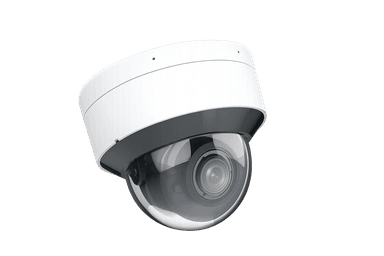
xTrack
AI shopper intelligence for footfall, heatmaps, demographics, and conversion visibility
Learn More →The real challenge in 2026 is turning fragmented data into action at the store level — where decisions about staffing, inventory placement, promotions, and customer experience actually happen.
The Fragmentation Gap
Walk into almost any mid-sized retail chain in Singapore and the pattern repeats. The e-commerce team runs campaigns based on browsing data and abandoned cart metrics. The store operations team manages staffing based on spreadsheets and intuition. The marketing team analyses loyalty programme data separately. And the store manager, the person who actually interacts with customers, often has access to none of it in real time.
This fragmentation is not just an inconvenience — it has a direct cost. A promotion that performs well online may never be adjusted for in-store conditions. A footfall surge detected by a store camera cannot trigger an automatic staffing alert because the camera system and the scheduling tool are separate worlds. A loyalty member who browses products on their phone during the commute arrives at the store to find the same items out of stock, because the online and in-store inventory systems are out of sync.
KPMG notes that AI adoption across Singapore's consumer and retail sector is being held back by this very problem, compounded by PDPA-driven consent constraints and high upfront implementation costs. The challenge is structural, not technical. The data exists. The tools to act on it are available. But they need to be connected.
From Data Collection to Store-Level Action
This is where the conversation shifts from data collection to operational action. Collecting more data is not the answer — Singapore retailers already generate more information than they can use. What is missing is the layer that sits between data capture and store-level decisions: an intelligent infrastructure that can ingest fragmented signals from multiple sources, make sense of them in context, and trigger real-world actions in the store.
AI-powered in-store solutions are uniquely positioned to play this role. Unlike cloud-only analytics platforms that produce dashboards and reports, these systems operate at the physical point of sale, inside the store environment where customer behaviour actually happens.
Two capabilities are essential for bridging the fragmentation gap. The first is the ability to capture and interpret in-store shopper behaviour with enough precision to connect it to other data streams. The second is the ability to connect all store systems — cameras, POS terminals, IoT devices, gateways — through a unified network that can relay insights and trigger actions in real time.
xTrack: Turning Shopper Behaviour into Structured Data
The foundation of store-level action is knowing what is actually happening inside the store. AI shopper intelligence cameras, such as xRetail's xTrack solution, do more than count visitors. They use computer vision to understand movement patterns, dwell times, zone performance, and queue lengths — converting raw video into structured behavioural data.
For a Singapore retailer managing multiple channels, this in-store data is the missing piece. Online analytics already show what customers browse, click, and abandon. POS systems show what they purchase. But between entry and checkout lies a blind spot. xTrack fills it.
When xTrack data is combined with online browsing patterns or loyalty programme profiles, a previously fragmented picture becomes coherent. A retailer can see that customers who browse a specific category online tend to dwell in a particular store zone before converting. They can identify which shelf placements drive the strongest engagement across different store formats. They can measure whether a digital promotion actually drives foot traffic to the physical store within a specific time window.
This is the bridge between fragmented data and unified intelligence. The data was always there, but it was locked in separate silos. xTrack provides the in-store behavioural layer that makes the whole picture visible.
xPilot: Connecting Systems for Real-Time Action
Structured data is valuable, but data alone does not change the store floor. Action requires connectivity — the ability to move insights from the analytics engine to the systems that execute operational changes.
This is where xRetail's xPilot solution plays a critical role. xPilot is a converged gateway and connectivity platform that links a store's entire technology ecosystem — AI cameras, POS terminals, IoT sensors, network infrastructure, and cloud applications — through a single, resilient backbone. It ensures that data flows freely between systems and that insights from the Vortex Cloud can be translated into real-time operational actions.
Consider a common scenario in Singapore retail. A store experiences a sudden footfall surge during lunch hour. The xTrack cameras detect the surge and send the data through the xPilot gateway to the Vortex Cloud analytics engine. Within seconds, the system can trigger a series of actions: an alert to the store manager to open additional checkout lanes, a dynamic adjustment to staffing recommendations, and a notification to the back-of-house team to restock fast-moving categories. All of this happens because the infrastructure connects data capture to operational execution.
This is the difference between data fragmentation and data orchestration. Fragmented data lives in silos. Orchestrated data flows through a connected infrastructure and produces store-level outcomes.
The Singapore Retail Opportunity
Singapore's retail landscape is uniquely positioned to benefit from this approach. The market is compact, digitally sophisticated, and concentrated in high-footfall locations such as Orchard Road, Marina Bay, and heartland malls. Labour costs are high, making every minute of staff time precious. Shopper expectations are exacting, shaped by seamless digital experiences in banking, transport, and food delivery.
KPMG's report highlights that AI-driven omnichannel retail orchestration is already enabling real-time coordination of customer, inventory, pricing, and experience data — evolving toward shopping copilots and agentic customer journeys. Retailers who invest in connected AI infrastructure today are building the foundation for these more advanced capabilities tomorrow.
The chains that will lead in 2026 are those that have closed the gap between data collection and store-level action — connecting the digital and physical halves of their business through intelligent, unified infrastructure.
Closing the fragmentation gap is what sets leading retailers apart in 2026.
Ready to bridge the gap between fragmented data and store-level action? xRetail Solutions provides the intelligent infrastructure that connects AI shopper intelligence, IoT connectivity, and real-time operational control. Visit www.xretails.com to learn how xTrack and xPilot can transform your retail operations.
Related Articles
Continue exploring insights from xRetail Solutions
AI Camera Revolution in Singapore Retail: From Surveillance to Full Shopper Intelligence
July 16, 2026
The Cost of Store Disconnection: Why Isolated Retail Systems Undermine Customer Experience and Profitability
July 16, 2026
Smart Staff Scheduling with Footfall Analytics
July 14, 2026Ready to Transform Your Retail Operations?
Explore how xRetail Solutions connects shopper intelligence, resilient store networks, and unified operations visibility for modern retail teams.
Contact Our Team