
Edge AI vs Cloud AI in Retail: Why Singapore Retailers Should Evaluate On-Device Intelligence
Retailers are no longer asking whether AI belongs in store operations. The more practical question is where AI should run.
For Singapore retailers managing physical stores, malls, F&B outlets, convenience formats, or regional multi-outlet portfolios, that question matters because store analytics is time-sensitive. Footfall counts, occupancy movement, dwell time, conversion signals, and shopper-flow patterns are created inside the store. If every video or sensor stream has to travel to a remote cloud environment before the business can respond, the architecture may introduce latency, bandwidth load, resilience risk, and additional data governance exposure.
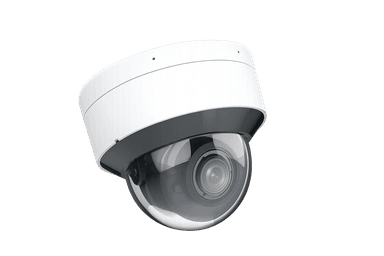
xTrack
Store-level shopper intelligence with local edge processing and aggregated dashboard reporting
Learn More →
Cloud AI is still valuable for central dashboards, management, long-term reporting, cross-store comparisons, alerts, user access, and aggregated trend analysis. The stronger architecture for many retail analytics use cases is hybrid: edge AI at the store level for real-time inference, and cloud intelligence at the portfolio level for visibility and management.
Gartner has said that through 2027, 50% of critical enterprise applications will reside outside centralised public cloud locations. For retail leaders, the implication is straightforward: evaluate AI architecture by workload. A quarterly sales forecast may work well in the cloud. A real-time footfall alert at a busy store entrance should be evaluated differently.
Edge AI vs cloud AI in retail operations
Edge AI means the model runs close to where the data is created. In retail analytics, that usually means on an in-store device, gateway, smart camera, or local compute node. Cloud AI means the data is transmitted to cloud infrastructure for processing, analysis, storage, or dashboarding.
Both models have a place. The wrong question is edge or cloud. The better question is which layer should make which decision.
| Evaluation area | Edge AI for store analytics | Cloud AI for retail management |
|---|---|---|
| Best fit | Real-time inference in each store | Aggregated reporting across stores |
| Typical data flow | Raw inputs processed locally, selected outputs sent onward | Metrics, events, alerts, and summaries consolidated centrally |
| Operational value | Faster local detection for footfall, occupancy, and movement patterns | Portfolio visibility, benchmarking, user access, and management workflows |
| Privacy posture | Can reduce raw video movement when designed properly | Requires stronger governance for data transfers, access, retention, and vendor controls |
| Network dependency | Can continue local inference when connectivity is degraded, depending on configuration | Depends on reliable connectivity for live central visibility |
| Cost profile | More local compute and device management | More cloud compute, storage, and data transfer exposure |
The retail use case should decide the placement. Store-level video inference is different from corporate analytics. A store manager needs fast operational signals. A regional director needs consistent, aggregated intelligence across outlets. Those requirements point to a layered architecture, not a single compute location.
Why real-time store analytics fits the edge
In-store analytics often depends on events that are valuable precisely because they are happening now. A crowd forming near a counter, a display attracting dwell time, a high-traffic zone being under-staffed, or a conversion gap between visitors and transactions are operational signals. Their value drops when they are delayed or lost in heavy data pipelines.
Latency is one reason. A latency comparison study hosted by the U.S. National Science Foundation measured 8,456 end users, 6,341 edge servers, and 69 cloud locations. It found that 58% of end users could reach a nearby edge server in under 10 milliseconds, compared with 29% for a nearby cloud location. This was not a retail-specific study, but it supports the infrastructure logic behind edge placement for latency-sensitive workloads.
Bandwidth is another reason. Consider an illustrative 1080p H.264 camera stream at 5 Mbps. If it is streamed continuously for 30 days, it generates about 1.62 TB of data. This is a bitrate-based illustration, not a universal deployment benchmark. Actual bandwidth depends on frame rate, compression, scene complexity, recording policy, uptime, and camera configuration.
Edge inference changes the flow. Instead of sending continuous raw video upstream, the store can process the stream locally and transmit only analytics outputs such as counts, occupancy, zone activity, dwell indicators, alerts, or aggregated metadata. That can reduce cloud dependency and make store analytics more practical across many outlets.
Reliability also matters. Retail stores cannot assume perfect connectivity at all times. A store may face broadband interruption, packet loss, temporary congestion, or maintenance windows. If the analytics logic depends entirely on a cloud round trip, visibility may degrade at exactly the moment the store needs it. Edge AI can keep local inference closer to the store environment, while cloud dashboards synchronise the outputs when connectivity is available.
Singapore context: AI adoption, digitalisation, and PDPA
Singapore retailers are under pressure to improve productivity, customer experience, and operating resilience while managing manpower constraints and rising costs. EnterpriseSG and IMDA launched a refreshed Retail Industry Digital Plan on 26 May 2026 to guide over 2,000 SME retailers in digital transformation. The same factsheet noted that over 75% of SMEs had adopted entry-level solutions and 45% had adopted intermediate solutions, while advanced solution adoption remained limited.
AI adoption is rising too, but not evenly. IMDA reported that SME AI adoption rose from 4.2% in 2023 to 14.5% in 2024, while non-SME adoption rose from 44.0% to 62.5%.
This creates a practical decision point. Retailers want AI, but store analytics deployments must be realistic for operations teams, IT teams, and compliance teams. Edge AI can be useful because it helps align the architecture with where the operational data is produced.
Privacy needs careful language. Under Singapore PDPA guidance, photographs or video recordings of identifiable individuals can be personal data when collected, used, or disclosed by organisations. PDPA transfer limitation rules also matter when personal data is transferred outside Singapore, because organisations must ensure a comparable standard of protection for transferred personal data.
Edge processing does not automatically make a deployment PDPA compliant. Consent, notification, purpose limitation, retention, access, security, vendor governance, and internal policies still matter. What edge can support is privacy-by-design: minimising the movement of raw video, reducing unnecessary exposure, and allowing analytics outputs to be designed around anonymised or aggregated data wherever appropriate.
Why cloud still matters for portfolio intelligence
The case for edge AI should not become an argument against cloud. Retail leaders still need cloud systems because most decisions happen above the individual store.
Regional managers need to compare locations. IT teams need device health and estate visibility. Transformation teams need adoption reporting. Operations directors need dashboards that show trends across store formats, time periods, campaigns, and regions. Finance and leadership teams need consistent metrics rather than isolated local readings.
This is where cloud AI and cloud dashboards are valuable. They consolidate store-level outputs into a manageable view. They help leaders identify which stores need attention, which locations are changing, which formats are performing differently, and where operational processes may need adjustment.
Cloud cost still needs discipline. Gartner has predicted that 50% of cloud compute resources will be devoted to AI workloads by 2029, up from less than 10% at the time of its May 2025 release. Gartner also said organisations may need to bring AI to where the data is to support that growth.
In a separate 2025 Gartner Q&A, Gartner predicted that by 2030, companies that fail to optimise the underlying AI compute environment will pay over 50% more than those that do.
The commercial point for retail is not simply that cloud is expensive. The point is that raw video and high-volume sensor workloads should be placed deliberately. Use cloud where aggregation, management, collaboration, and trend intelligence create value. Use edge where real-time local inference reduces unnecessary round trips and data movement.
A hybrid architecture for xTrack and Vortex Cloud
xRetail’s product architecture is naturally aligned with the hybrid model. xTrack is positioned for AI shopper intelligence, including footfall, heatmaps, demographics, conversion, and shopper-flow analytics. Vortex Cloud is the unified operations dashboard for cross-store visibility.
xRetail’s published Terms of Service states that for xTrack, video processing occurs locally on the edge device, no video footage is transmitted to the cloud, no biometric data is collected, stored, or processed, and only anonymised, aggregated analytics data is transmitted for dashboard reporting.
That supports a clear architecture story.
| Layer | Role in the retail analytics architecture | Example outputs |
|---|---|---|
| Store edge layer | Process video or sensor inputs locally and convert them into operational signals | Footfall counts, occupancy indicators, heatmap data, dwell signals |
| Secure sync layer | Send selected anonymised and aggregated analytics outputs upstream | Events, summaries, device status, store metrics |
| Vortex Cloud layer | Aggregate store metrics into dashboards, reports, alerts, and comparisons | Multi-store performance, trend analysis, regional dashboards, management views |
| Leadership workflow layer | Turn analytics into operating decisions | Staffing review, layout optimisation, campaign comparison, store support priorities |
This makes the store the real-time decision layer and the cloud the portfolio intelligence layer. It avoids a false trade-off. Retailers do not need to choose between local speed and central visibility. The architecture can provide both when the data flow is designed properly.
How retail leaders should evaluate the decision
For CTOs and operations leaders, the evaluation should be structured around six questions.
First, what data needs to be processed in real time? If the use case involves occupancy thresholds, people counting, or fast shopper-flow detection, edge inference should be evaluated.
Second, what raw data would otherwise leave the store? If the workload involves video or other identifiable inputs, local processing may help minimise data movement and simplify the governance conversation, while still requiring full PDPA controls.
Third, what happens when the network is degraded? If the store still needs local visibility during an outage, the architecture should not depend entirely on cloud processing.
Fourth, what should be stored centrally? Store leaders may not need raw inputs in the cloud. They usually need trusted metrics, alerts, history, and comparisons.
Fifth, what will cloud AI cost at scale? The economics of one store can look manageable. The economics of continuous multi-camera streaming across many stores can look very different.
Sixth, how will governance be documented? AI systems need clear policies for data collection, access, retention, security, model monitoring, vendor responsibilities, and escalation.
The market direction supports this evaluation. IDC estimated global edge computing spending at US$228 billion in 2024 and forecast spending near US$378 billion by 2028. IDC also forecast Asia Pacific edge spending at US$48.9 billion in 2024 and US$84 billion by 2028, with a five-year CAGR of 15%.
Retail AI spending is also moving from experimentation toward more structured investment. NRF’s Retail AI Trends 2025 report, based on a survey of 56 retail AI leaders at U.S.-based retailers, found that 77% said AI was 5% or less of their current technology budget, while only 41% expected it to remain 5% or less in three years and 39% expected AI to account for 10% or more. The same report found cost and model accuracy were each cited by 57% as top strategic concerns.
For Singapore retailers, the takeaway is not to chase architecture trends. It is to place each workload where it performs best. Real-time store analytics belongs close to the store. Aggregated intelligence belongs in the cloud. The strongest retail AI architecture is the one that connects both layers cleanly.
FAQ
Is edge AI better than cloud AI for retail analytics?
Not always. Edge AI is usually better for real-time store-level inference, such as footfall, occupancy, and shopper-flow analytics. Cloud AI is better for central dashboards, reporting, multi-store comparison, management workflows, and longer-term trend analysis.
Does edge AI make retail video analytics PDPA compliant in Singapore?
No. Edge AI can support privacy-by-design by reducing raw video movement, but PDPA compliance still depends on proper consent, notification, purpose limitation, retention, access controls, security, transfer safeguards, and governance.
Why not stream all store video to the cloud?
Continuous video streaming can create latency, bandwidth, storage, cloud compute, and privacy exposure concerns. For many analytics use cases, the store does not need to send raw video upstream if local inference can produce anonymised and aggregated metrics.
What should go to the cloud in a hybrid retail AI architecture?
The cloud should receive selected outputs such as anonymised counts, events, alerts, device health, aggregated store metrics, and trend data. This supports dashboards and management without requiring all raw inputs to be centralised.
How do xTrack and Vortex Cloud fit this model?
xTrack is the store-level AI shopper intelligence layer for local edge processing. Vortex Cloud is the dashboard layer for cross-store visibility, aggregated reporting, and management workflows.
Explore how xTrack processes shopper intelligence at the edge and syncs anonymised store metrics into Vortex Cloud for cross-store visibility. Visit www.xretails.com to discuss a Singapore retail analytics deployment.
Sources
- Gartner: 50% of critical enterprise applications will reside outside centralized public cloud locations through 2027
- Gartner: Top trends shaping the future of cloud
- Gartner: AI-enabling cloud services are the future of cloud
- EE Times Asia: IDC edge computing spending forecast
- BizTechReports: IDC Asia Pacific edge spending forecast
- NRF: Retail AI Trends 2025
- EnterpriseSG and IMDA: Refreshed Retail Industry Digital Plan
- IMDA: Singapore Digital Economy Report 2025
- PDPC: Advisory Guidelines on the PDPA for Selected Topics
- Singapore Statutes Online: Personal Data Protection Act 2012
- NSF-hosted latency comparison paper
- xRetail Terms of Service
Related Articles
Continue exploring insights from xRetail Solutions
AI Retail Solutions: The Store Operating Layer Modern Retail Needs
July 27, 2026
The Rise of Unified Commerce: How AI Bridges Online and Offline Retail
July 23, 2026
AI Camera Revolution in Singapore Retail: From Surveillance to Full Shopper Intelligence
July 16, 2026Ready to Transform Your Retail Operations?
Explore how xRetail Solutions connects shopper intelligence, resilient store networks, and unified operations visibility for modern retail teams.
Contact Our Team