
The Rise of Unified Commerce: How AI Bridges Online and Offline Retail
Retailers no longer compete through a single storefront, channel, or customer touchpoint. A shopper may discover a product on social media, compare it on a marketplace, check availability on a brand website, visit a physical store, pay through a digital wallet, join a loyalty programme, and later ask for support through chat. For the customer, this journey feels like one decision. For the retailer, it often becomes a set of disconnected systems.
That gap is where unified commerce is becoming critical.

Vortex Cloud
Unified operations dashboard for connected store visibility and retail decision-making
Learn More →Unified commerce is not simply another name for omnichannel retail. Omnichannel focuses on giving customers multiple ways to browse, buy, collect, and return. Unified commerce goes deeper. It connects the operational data behind those experiences, including POS, ecommerce, marketplace sales, loyalty, payments, inventory, fulfilment, customer service, and physical store activity. The goal is to create one operational view of the customer, the product, and the store.
This matters because AI is only as useful as the data it can access. Personalisation, demand forecasting, AI concierge experiences, staff recommendations, real-time inventory visibility, and store-level decision support all depend on connected data. Without that foundation, AI becomes a thin layer over fragmented systems. It may generate content or answer questions, but it cannot reliably improve retail operations.
For retailers in Singapore and Southeast Asia, the pressure is rising. Digital commerce continues to grow, social discovery is changing how shoppers find products, and physical stores remain central to the customer journey. According to the Google, Temasek, and Bain e-Conomy SEA 2025 release, Southeast Asia's digital economy is on track to surpass US$300 billion in GMV in 2025, with ecommerce projected at US$185 billion. The same release says video commerce accounts for about a quarter of ecommerce GMV, three in five people in the region shop online, and more than 60% of payments are digital.
At the same time, stores have not disappeared. IBM and NRF's January 2026 consumer AI shopping study reports that 72% of surveyed consumers still shop in stores, while 45% use AI during buying journeys. The implication is clear: retail is becoming more digital, but not less physical. The winning model is not online versus offline. It is connected commerce.
What Unified Commerce Really Means
Unified commerce means the retailer can see and act across channels from a common data foundation.
In practical terms, this includes knowing which products are available by store, warehouse, marketplace, and ecommerce channel. It means connecting customer profiles across online accounts, loyalty activity, purchase history, service cases, and in-store interactions where consent and privacy rules allow. It means store teams, ecommerce teams, and operations leaders work from aligned information instead of separate reports.
For a retail chain, unified commerce may connect POS transactions, inventory movements, staff workflows, store traffic, conversion, queue conditions, campaign performance, customer service, and fulfilment status. For a retail SME, it may begin more simply: integrating POS, ecommerce, inventory, and basic customer engagement tools before moving into advanced analytics.
The key point is that unified commerce is not only a customer experience strategy. It is an operating model. It helps leaders answer operational questions faster: which stores are converting traffic into sales, which products are being discovered online but bought offline, which items are creating fulfilment delays, which campaigns are driving store visits, and which branches need better staff coverage, connectivity, or inventory support.
These are the questions that make AI useful in retail. AI can analyse patterns, suggest next actions, forecast demand, and support staff, but only when the retailer has enough connected, reliable data.
Why Omnichannel Alone Is No Longer Enough
Omnichannel retail gave customers more options: buy online, collect in store, return through another channel, browse on mobile, or interact through social commerce. That was an important step. But many retailers still run these channels as separate systems.
The result is familiar. Ecommerce may show available stock that is not truly available at store level. Store staff may not see a customer's online browsing or service history. Marketing teams may personalise emails based on web behaviour while store teams operate without the same context. Operations leaders may receive separate reports for store traffic, POS, inventory, and online sales, making it difficult to see what is really happening.
In a fast-moving retail environment, this fragmentation creates cost and friction. Customers expect consistency. Staff need accurate information. Managers need real-time visibility. IT teams need systems that can integrate without turning every change into a bespoke project.
Salesforce's Connected Shoppers Report shows how seriously retailers are taking this shift. The report surveyed 8,350 shoppers and 1,700 retail decision-makers, and 88% of retailers said unified commerce will significantly affect their goals. It also found that 53% of shoppers discover products on social platforms, up from 46% in 2023. Discovery, purchase, fulfilment, and service are spreading across more channels, which makes operational connection more important.
Omnichannel is the customer-facing promise. Unified commerce is the data and operations foundation needed to keep that promise.
How AI Bridges Online and Offline Retail
AI can help retailers connect online and offline retail in three main ways: by interpreting data, automating decisions, and assisting people.
First, AI can interpret signals across channels. A retailer may have website searches, marketplace orders, loyalty purchases, store footfall, heatmaps, POS transactions, and customer service conversations. Individually, each signal is useful. Together, they can reveal demand shifts, store experience gaps, customer intent, and operational constraints.
Second, AI can support faster decisions. Demand forecasting can help teams plan stock by location and channel. Customer segmentation can guide more relevant campaigns. Store analytics can highlight where traffic is high but conversion is weak. Fulfilment intelligence can help decide whether an order should be shipped from a warehouse, a nearby store, or another branch.
Third, AI can assist staff and customers. AI concierge and GenAI customer engagement chatbots, named in EnterpriseSG and IMDA's May 2026 Retail Industry Digital Plan factsheet as front-of-house solutions, can help shoppers find products and receive faster answers. In store, AI-supported clienteling can help staff understand product availability, customer preferences, and service needs, subject to privacy and consent requirements.
NVIDIA's 2026 retail and CPG survey summary reports strong industry momentum, including 91% of respondents actively using or assessing AI and 90% planning to increase AI budgets in 2026. It identifies demand forecasting, supply chain efficiency, customer analysis and segmentation, personalisation, intelligent shopping assistants, catalog enrichment, agentic AI, and physical AI as major retail AI use cases.
These use cases are not separate from unified commerce. They depend on it. AI needs connected data from online and offline operations to move from interesting experiments to practical retail value.
Key Use Cases for Unified Commerce and AI
Real-time inventory visibility
Inventory is one of the clearest starting points. If a retailer cannot trust stock data across stores, warehouses, ecommerce, and marketplaces, every downstream experience suffers. Customers see the wrong availability. Staff cannot recommend alternatives confidently. Fulfilment teams face avoidable exceptions.
Unified commerce creates the foundation for more accurate inventory visibility. AI can then help forecast demand, detect unusual stock movement, suggest replenishment priorities, and identify products at risk of stockout or overstock. This is especially relevant in Southeast Asia, where retailers may operate across malls, marketplaces, social channels, and multiple fulfilment models.
Personalisation across channels
Personalisation is often discussed as a marketing topic, but in unified commerce it becomes operational. A connected customer view can help retailers understand preferences, purchase history, channel behaviour, and service context. AI can use that foundation to suggest relevant products, offers, or support actions.
The risk is overpromising. Unified commerce does not guarantee personalisation. It creates the data foundation for better personalisation when the retailer has consented customer data, quality controls, and clear business rules.
Store-level visibility
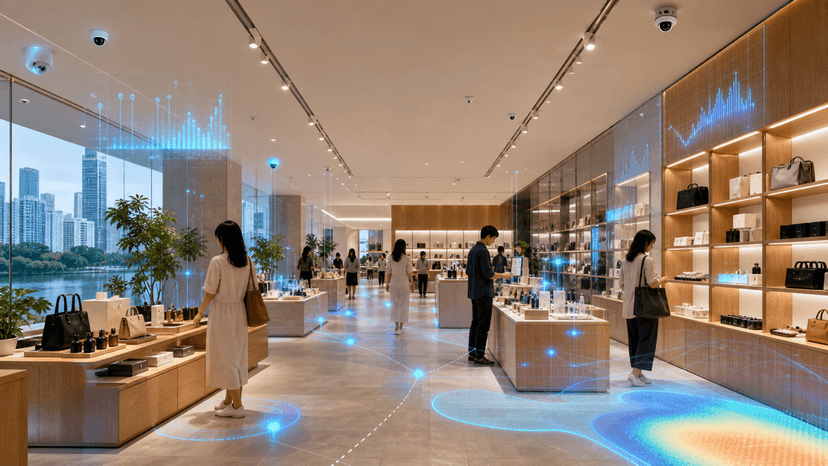
Physical stores remain important, but many retailers still have limited visibility into what happens before the sale. POS data shows transactions. It does not show missed opportunities, traffic flow, dwell patterns, or conversion gaps.
This is where store analytics can add value. For xRetail, xTrack provides AI shopper intelligence for footfall, heatmaps, demographics, and conversion. Used responsibly, this type of physical store data can help retailers understand how stores perform beyond sales alone. When combined with POS, inventory, campaigns, and staffing data, it supports better operational decisions.
Customer data and service workflows
Customers do not separate their experience by department. If they asked a question online, bought in store, and requested a return later, they expect the retailer to understand the full context. Unified commerce helps connect customer data and service workflows so teams can respond with fewer blind spots.
AI can assist by summarising service history, suggesting next-best actions, routing enquiries, and helping staff answer common questions. But customer trust depends on privacy, consent, and clear boundaries around how data is used.
Fulfilment and channel orchestration
Unified commerce also improves fulfilment decisions. A retailer may need to decide whether to fulfil an order from a central warehouse, a nearby store, or a partner location. AI can support these choices by considering stock, location, demand, cost, and service expectations.
For store networks, this shifts the role of the store. Stores are no longer only sales locations. They may also act as experience centres, fulfilment nodes, return points, service locations, and local inventory hubs.
Network resilience and operational continuity
Connected commerce depends on connected infrastructure. If store systems cannot stay online, retailers lose visibility and service consistency. xPilot 3 Pro is xRetail's 5G failover gateway for network resilience and remote management. In a unified commerce environment, resilient connectivity supports POS, inventory sync, cloud dashboards, service tools, and store operations.
Implementation Roadmap for Singapore and Southeast Asia Retailers
For many retailers, the path to unified commerce should be staged. The goal is not to replace every system at once. The goal is to create a practical data foundation that can improve operations over time.
Step 1: Map the current retail data landscape. Start by listing the systems that hold customer, product, inventory, transaction, payment, loyalty, service, and store activity data. Identify which systems are connected, which are manual, and which produce reports that cannot be reconciled.
Step 2: Prioritise the highest-friction workflows. Retailers should avoid making unified commerce a broad technology slogan. Focus on operational problems: inaccurate stock, slow fulfilment, limited store visibility, disconnected customer records, unreliable connectivity, or inconsistent reporting.
Step 3: Establish clean product and inventory data. AI use cases often fail because product, SKU, pricing, and inventory data are inconsistent. Clean data standards are a practical prerequisite for better forecasting, search, recommendations, and fulfilment.
Step 4: Connect store and digital signals. Bring together POS, ecommerce, loyalty, inventory, and store analytics where relevant. For physical retail, this may include footfall, heatmaps, demographics, and conversion data from solutions such as xTrack. The purpose is to understand both demand and store behaviour.
Step 5: Add dashboards for operational visibility. Operations teams need shared views, not more isolated reports. Vortex Cloud is xRetail's unified operations dashboard. A dashboard layer can help leaders monitor stores, infrastructure, and performance signals in one place, depending on the systems integrated.
Step 6: Pilot AI on focused use cases. Retailers should begin with use cases where data is available and the business impact is easy to observe. Examples include demand forecasting, stock exception alerts, customer service support, AI concierge experiences, and store conversion analysis.
Step 7: Scale with governance. As AI becomes more embedded, governance becomes important. Retailers need rules for privacy, consent, data retention, model monitoring, human oversight, and escalation.
Risks and Data-Readiness Checklist
Unified commerce creates opportunity, but it also exposes weaknesses. Retailers should assess readiness before moving too quickly into AI.
Data quality: Are product, customer, inventory, and transaction records consistent across systems?
Integration: Can POS, ecommerce, loyalty, payments, inventory, and store analytics exchange data reliably?
Store visibility: Does the business understand store traffic, conversion, and operational conditions beyond POS sales?
Connectivity: Can stores maintain reliable access to cloud systems, dashboards, and transaction tools?
Privacy and consent: Is customer data collected and used transparently, with appropriate permissions?
Operational ownership: Who owns the unified commerce roadmap across retail, IT, ecommerce, and store operations?
AI governance: Are there clear rules for human review, recommendations, automation, and customer-facing responses?
Measurement: Are pilots tied to practical metrics such as service speed, stock availability, staff productivity, conversion visibility, or fulfilment performance?
EnterpriseSG and IMDA's refreshed Retail Industry Digital Plan factsheet, released in May 2026, suggests that Singapore retail SMEs are making progress in digital adoption. It states that more than 75% have adopted entry-level digital solutions and 45% have adopted intermediate solutions, while advanced adoption remains limited. It also says 88% of eligible retail enterprises are keen to adopt at least one sector-specific solution in 2026.
That is an important signal. The next phase of retail digitalisation is not just adopting tools. It is connecting them.
How xRetail Fits Into the Unified Commerce Conversation
xRetail's role in this conversation is focused on retail operations, store visibility, resilience, and connected decision-making.
xTrack supports AI shopper intelligence through footfall, heatmaps, demographics, and conversion. xPilot 3 Pro supports network resilience and remote management through a 5G failover gateway. Vortex Cloud provides a unified operations dashboard. Together, these capabilities can support the operational side of unified commerce by helping retailers improve visibility across physical stores and connected systems.
This is not about claiming that one platform solves every retail challenge. Unified commerce is a wider operating model involving data, systems, people, processes, and governance. But for retailers trying to make AI practical, store-level visibility and operational resilience are important parts of the foundation.
The Future of Retail AI Is Connected
AI will continue to shape retail discovery, service, fulfilment, and operations. McKinsey has framed AI as changing the role of stores, with retailers needing clearer store missions, real-time inventory visibility, customer context, AI-supported clienteling, fulfilment, and frictionless checkout as AI becomes more influential in shopping journeys.
For Singapore and Southeast Asia retailers, the practical takeaway is straightforward: AI should not be treated as a standalone layer. It should be built on unified commerce foundations that connect the retailer's online and offline reality.
The retailers that move fastest will not necessarily be those that adopt the most AI tools. They will be the ones that connect the right data, solve real operational problems, and give teams better visibility into how customers, products, stores, and channels work together.
Unified commerce is the foundation. AI is the bridge. Better retail operations are the outcome to aim for.
FAQ
What is unified commerce in retail?
Unified commerce is a retail operating model that connects data and workflows across POS, ecommerce, marketplaces, loyalty, inventory, payments, fulfilment, customer service, and physical store activity. It gives retailers a more complete view of customers, products, channels, and operations.
How is unified commerce different from omnichannel retail?
Omnichannel retail focuses on giving customers multiple channels to browse, buy, collect, and return. Unified commerce connects the underlying data and operations behind those channels, so retailers can act from one shared view.
Why does AI need unified commerce?
AI needs reliable, connected data to make useful recommendations, forecasts, and decisions. Without unified commerce, AI may only see fragmented parts of the customer journey or retail operation.
What are the best AI use cases for unified commerce?
Practical use cases include demand forecasting, inventory visibility, customer segmentation, AI concierge experiences, store analytics, service support, fulfilment optimisation, and staff decision support.
Is unified commerce only for large retailers?
No. Retail SMEs can start with focused integrations such as POS, ecommerce, inventory, and basic customer engagement data. The important step is to solve a real operational problem before expanding into more advanced AI use cases.
Explore how xRetail helps retailers connect store visibility, network resilience, and operations data for smarter omnichannel decisions.
Sources
Related Articles
Continue exploring insights from xRetail Solutions
AI Camera Revolution in Singapore Retail: From Surveillance to Full Shopper Intelligence
July 16, 2026
AI Retail Singapore: Turning Data Fragmentation into Store-Level Action in 2026
July 16, 2026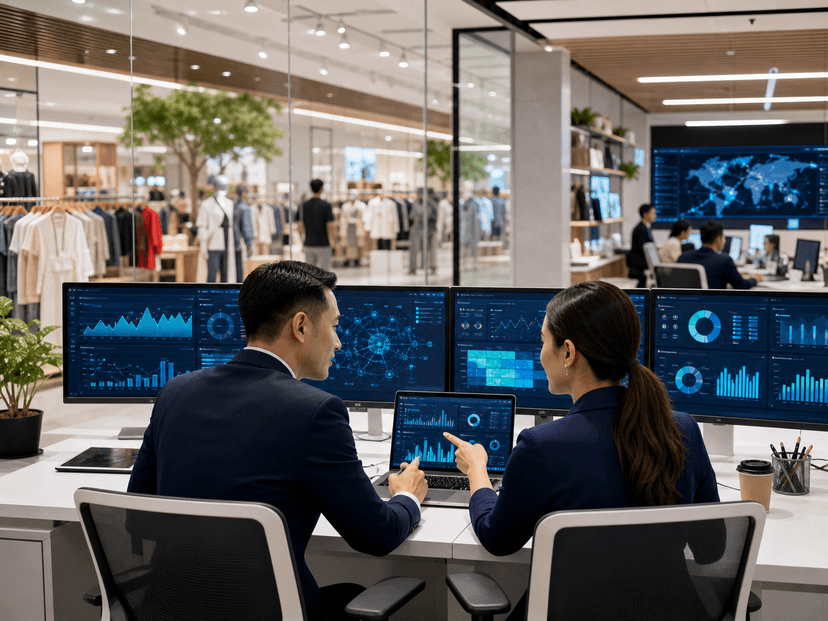
The Cost of Store Disconnection: Why Isolated Retail Systems Undermine Customer Experience and Profitability
July 16, 2026Ready to Transform Your Retail Operations?
Explore how xRetail Solutions connects shopper intelligence, resilient store networks, and unified operations visibility for modern retail teams.
Contact Our Team