
Operational Data Integration Is the Missing Layer in Retail AI Adoption
Retailers across Singapore and APAC are under pressure to move faster. Customers expect online and offline experiences to feel connected. Store teams need clearer visibility into traffic, conversion, device uptime, payments, fulfilment, promotions and inventory. Leadership teams want AI to help make better decisions in less time.
The challenge is that AI does not automatically simplify fragmented operations. In many cases, it reveals how fragmented those operations already are.

Vortex Cloud
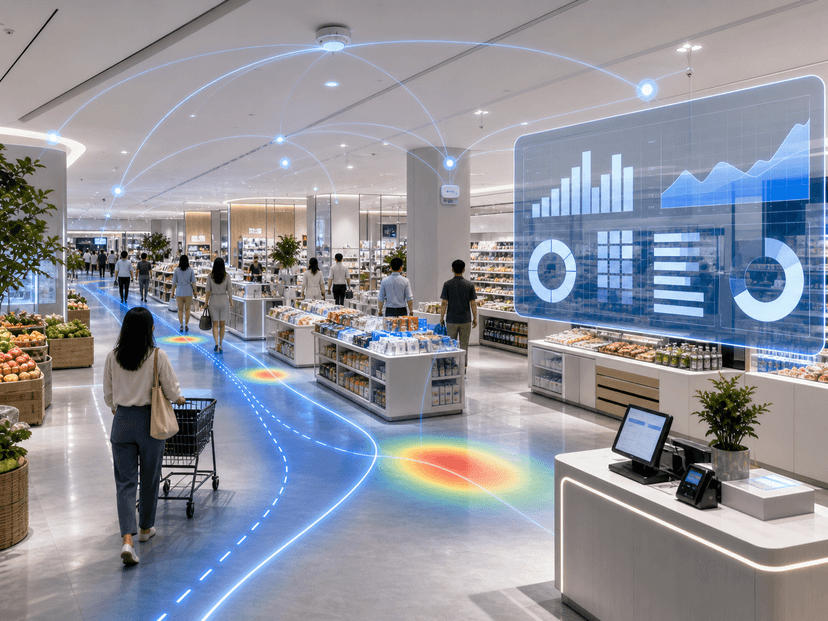
Unified retail operations visibility for footfall, network status, and device health
Learn More →If footfall data sits in one system, POS data in another, network health in another, and store team reporting in spreadsheets, AI has no single operational picture to work from. It may identify a pattern, but the business still struggles to act on it. A model can suggest that a store is underperforming, but if teams cannot quickly see whether the issue is traffic, conversion, staffing, device downtime, payment disruption or a promotion mismatch, the insight remains incomplete.
That is why operational data integration is becoming a critical layer in retail AI adoption. Before retailers ask what AI can automate, they need to ask whether the operational signals behind AI are connected, current and trusted.
Why fragmented retail data blocks AI value
Retail has always generated data. Stores, websites, apps, loyalty programmes, payment terminals, cameras, inventory systems, fulfilment platforms and support teams all create signals. The problem is not always a lack of data. The problem is that data often moves too slowly, sits in separate systems or lacks operational context.
Recent industry coverage has made this point clearly. Inside Retail Asia reported on July 1, 2026 that retailers are often missing AI value because the biggest opportunities sit behind the scenes, in the operational decisions that keep the business moving. Retail Asia also reported in June 2026 that batch data delays can limit real-time decision-making across inventory, promotions, fulfilment and customer engagement.
For retail operators, this is not an abstract technology issue. It shows up in daily execution.
A store may receive high traffic but low conversion, yet the team only sees the issue after the trading day ends. A promotion may perform well online but create confusion at the counter if store systems are not aligned. A payment terminal or camera may go offline, but the support team may not know until a store reports the issue manually. Inventory may appear available through one channel while store staff see a different picture on the ground.
AI can surface these inconsistencies faster. But if the underlying operational layer remains disconnected, AI cannot reliably turn those signals into coordinated action.
The APAC retail reality: fast channels, uneven visibility
Singapore and Southeast Asia retailers operate in a demanding environment. Retail networks often span malls, high streets, mixed-format stores, travel retail locations, pop-ups, marketplaces, delivery platforms and social commerce channels. Customer journeys move quickly between digital discovery and physical store visits. Peak demand can be shaped by payday periods, campaign days, tourism flows, public holidays and mall events.
This makes visibility especially important. Retail leaders need to know what is happening at store level while there is still time to respond. A delayed report may explain yesterday's problem, but it cannot help a store team correct today's traffic pattern, connectivity issue or conversion gap.
The region's omnichannel growth also makes operational consistency harder. A shopper may see a campaign on mobile, visit a store, ask about availability, use a digital voucher, pay at the counter and later expect delivery or loyalty updates to reflect the transaction. Each step depends on data moving cleanly between systems.
When those systems are fragmented, the customer experience can become inconsistent. When the operational data layer is connected, AI has a stronger foundation for useful recommendations, alerts and workflows.
What operational data integration should connect
For many retailers, the goal should not be to replace every existing platform. A practical integration strategy starts by connecting the highest-value operational signals first.
These signals may include store footfall, shopper movement, conversion indicators, POS transactions, payment connectivity, camera uptime, network status, device health, campaign timing, store opening hours and service incidents. For omnichannel retailers, it may also include fulfilment events, click-and-collect readiness, loyalty interactions and inventory availability.
The important point is not simply collecting these data points. It is connecting them in a way that supports decisions.
For example, footfall data becomes more useful when it can be viewed alongside conversion and trading patterns. Network health becomes more important when it is linked to POS, payment and camera availability. Device health matters because offline equipment can interrupt the data flow that AI depends on. A dashboard becomes more valuable when it helps teams see whether an issue is isolated to one store, recurring across a region or tied to a specific operational process.
Operational data integration should help answer practical questions:
Which stores have strong traffic but weak conversion?
Are customer-facing systems and operational devices online?
Are payment, POS and camera connections stable during peak periods?
Are store teams seeing issues early enough to act?
Where are data gaps preventing confident decisions?
These are the questions that create the foundation for AI that is useful in the real operating environment.
From dashboards to action: making AI useful at store level
Retail AI adoption often begins with pilots. Pilots can be valuable, but they can also create a false sense of progress if they are disconnected from daily operations. A controlled pilot may work well with clean data and a narrow workflow. Store operations are messier. Systems go offline. Teams are busy. Customer behaviour changes by location and time. Campaigns overlap. Data arrives late or in different formats.
For AI to create value, it needs to operate close to the conditions where decisions happen.
That means moving from passive reporting to operational visibility. Store managers, operations teams and IT teams need a shared view of what is happening, not separate reports that require manual reconciliation. The faster teams can see the same issue, understand its context and assign action, the more useful AI becomes.
AI is most practical when it helps prioritise attention. It can help identify unusual traffic patterns, flag possible conversion issues, highlight device or connectivity risk, and support more timely operational decisions. But those outputs depend on the quality, completeness and freshness of the data underneath.
In other words, retailers do not need AI to create more dashboards. They need AI to make operational signals easier to interpret and act on.
Building the foundation before scaling AI
Retailers considering AI at scale should start with a foundation check.
First, identify where important operational data currently lives. This includes both digital systems and physical store infrastructure. AI adoption plans often focus on customer data, but store operations data is equally important for execution.
Second, map where delays occur. If key data is processed in batches, arrives after trading hours or depends on manual reporting, AI may not be able to support real-time decisions.
Third, define which data should be trusted for each operational question. Conflicting versions of store, customer, device or transaction data can lead to confusion, especially when AI outputs are presented as recommendations.
Fourth, connect visibility to accountability. It is not enough to know that a store has a performance issue or a device is offline. The business needs a process for who reviews the signal, who acts, and how resolution is tracked.
Finally, start with focused use cases. Rather than trying to automate every process at once, retailers can begin with operational questions that are frequent, measurable and important to store performance. Examples include traffic-to-conversion visibility, device uptime monitoring, network resilience, campaign execution checks and store-level exception alerts.
This approach helps retailers make AI adoption more practical. It also reduces the risk of building advanced tools on top of weak operational foundations.
Where xRetail fits in the operational data layer
xRetail's product ecosystem is designed around store visibility, connectivity and operational control.
xTrack supports AI shopper intelligence by helping retailers understand footfall, heatmaps, demographics and conversion patterns. This helps connect physical shopper behaviour to operational decisions, rather than treating store traffic as a standalone metric.
xPilot 3 Pro supports network resilience by helping keep connectivity available across POS, payments, cameras and other store systems. For AI and analytics initiatives, connectivity is not just infrastructure. It is part of the data foundation.
Vortex Cloud brings operational visibility into a unified dashboard, helping teams monitor footfall, network status and device health from one screen. This can support faster issue detection and more coordinated store operations.
The larger point is that retail AI adoption should not begin with the question, "Which AI tool should we buy?" A better question is, "Can our operational data support the decisions we want AI to improve?"
AI can help retailers move faster, but only when it is grounded in connected, timely and trusted operational data. For Singapore and APAC retailers, that foundation may become the difference between AI pilots that look impressive and AI adoption that improves how stores actually run.
FAQ
Q: Why is operational data integration important for retail AI?
A: AI depends on accurate, timely and connected data. If store, POS, footfall, device, network and fulfilment data sit in separate systems, AI may identify issues without giving teams enough context to act.
Q: Does a retailer need to replace existing systems before adopting AI?
A: Not necessarily. Many retailers can begin by connecting high-value operational data points and workflows first. The priority is to create a trusted operational view that supports real decisions.
Q: What kind of retail data should be connected first?
A: Practical starting points include footfall, conversion indicators, POS activity, payment connectivity, network health, camera uptime, device status, campaign timing and store-level incidents.
Q: How does fragmented data affect omnichannel customer experience?
A: Fragmented data can create inconsistent pricing, promotion, loyalty, inventory or fulfilment experiences across channels. AI may expose these issues, but retailers still need integrated operations to resolve them.
Q: How can retailers in Singapore and APAC prepare for AI adoption?
A: They can start by mapping operational data sources, identifying delays, defining trusted data owners, connecting critical systems and focusing AI use cases on clear store-level decisions.
Ready to strengthen the operational data layer behind your retail AI strategy? Explore how xRetail helps store teams connect shopper intelligence, network resilience and operational visibility across physical retail environments.
Related Articles
Continue exploring insights from xRetail
Why Smart Stores Need More Than Analytics: The Case for a Connected Retail Operations Stack
July 3, 2026
Data to Action: How Singapore Retail Chains Turn Footfall into Insights
July 3, 2026
Real-Time Footfall Analytics for Singapore Retail Chains: Turn Visitor Data into Revenue
July 3, 2026Ready to Transform Your Retail Operations?
Discover how xRetail\' AI-powered IoT management and shopper analytics platforms can help your business reduce costs, increase revenue, and stay ahead of the competition.
Contact Our Team