
Retail Network Resilience: Why 5G Multi-WAN Failover Is a Revenue Strategy
Retail network resilience is no longer a back-office IT topic. For modern retail stores in Singapore and APAC, connectivity sits directly inside the revenue path: cloud POS, card payments, mobile checkout, inventory sync, IoT devices, footfall analytics, device health monitoring, and multi-store dashboards all depend on the store staying online.
When that connection fails, the impact is not limited to an error message on a router. Transactions can slow down or stop. Store teams lose access to operating systems they rely on during the trading day. Head office loses visibility into store performance. Customer flow, checkout continuity, and service bottlenecks become harder to manage in real time.
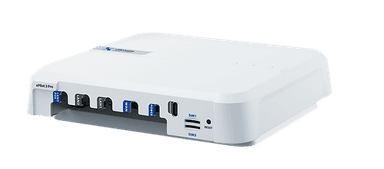
xPilot 3 Pro
5G multi-WAN failover gateway for retail network resilience
Learn More →That is why 5G failover retail strategies are becoming more relevant for retail operations and technology leaders. A resilient store network is not just about keeping Wi-Fi alive. It is about protecting revenue, continuity, and decision-making across every location.
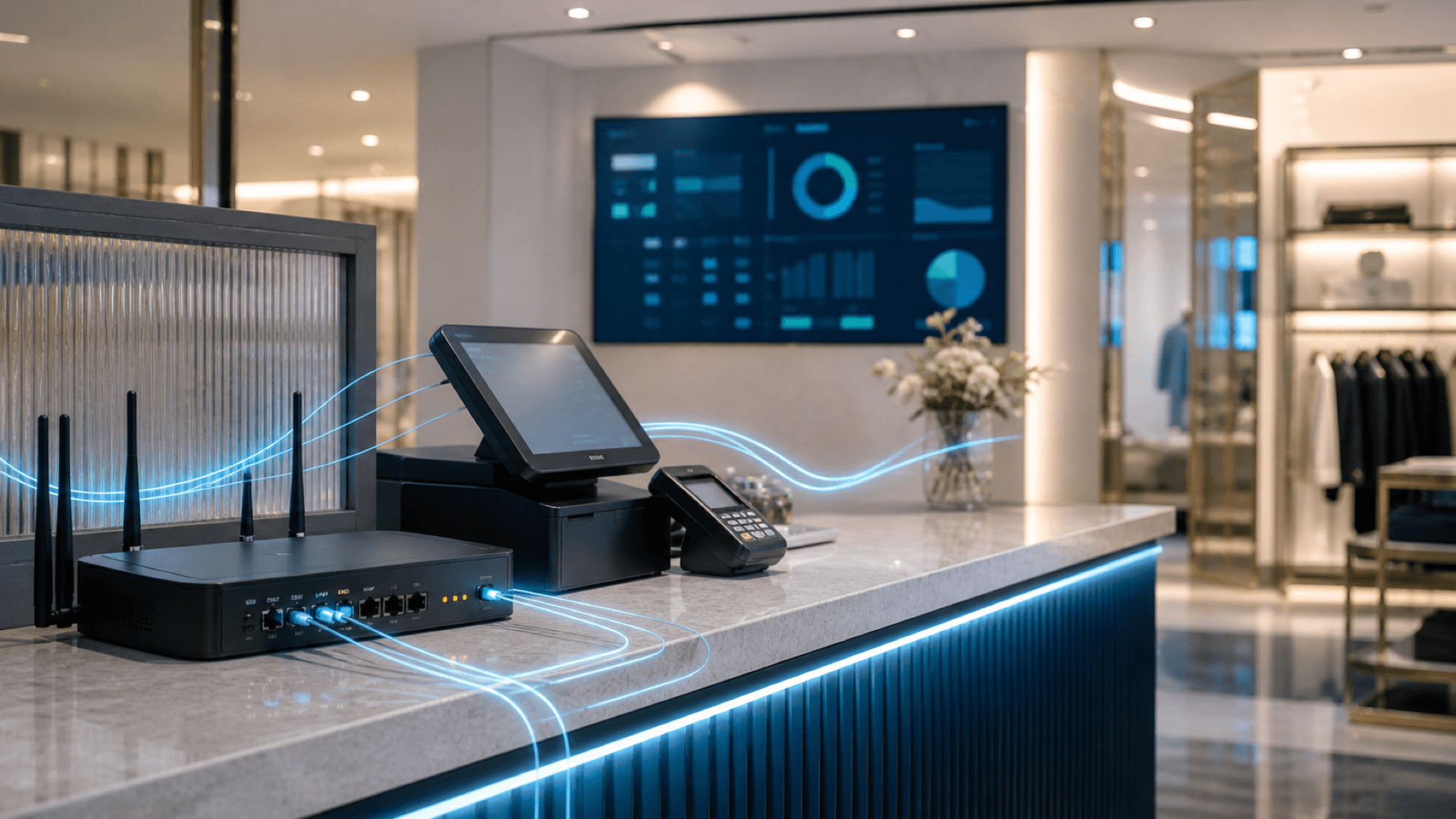
Retail Network Resilience Starts With the Connected Store
Retail digital transformation has made stores more productive, measurable, and connected. It has also made them more dependent on live connectivity.
A typical retail store may now rely on cloud POS terminals, payment devices, stock lookup tools, workforce systems, security cameras, shopper intelligence sensors, digital signage, IoT devices, and real-time reporting dashboards. Even when some systems can operate briefly offline, the store still depends on connectivity for authorisations, updates, data sync, remote support, and central monitoring.
Singapore's retail direction reinforces this shift. Enterprise Singapore and IMDA announced a refreshed Retail Industry Digital Plan on 26 May 2026 to guide more than 2,000 SME retailers on technology adoption. The Retail IDP points retailers toward digital capabilities such as digital POS, omnichannel operations, and systems that link transactions to backend inventory and customer workflows.
This is the right direction for retail productivity. It also raises the operational standard. Once retailers depend on connected operating models, store network downtime becomes a business continuity risk.
Why Single-Line Store Connectivity Creates Revenue Exposure
Many stores still depend on one primary broadband line. Some add a basic mobile backup. But a weak backup plan can still leave the business exposed.
There are several common failure patterns:
The fixed broadband line fails and there is no automatic backup.
The backup connection exists but requires manual intervention from store staff.
The mobile fallback uses one carrier, creating another single dependency.
The head office team cannot see which stores are degraded until staff report the issue.
The backup works for basic browsing but not for POS, payment terminals, cameras, IoT devices, or cloud services that need stable routing.
The result is a store that looks digitally advanced on normal days but becomes fragile under network stress. For one outlet, that may create a temporary operational problem. Across a multi-store estate, it can become a recurring revenue and visibility issue.
A 2026 Payments Dive summary of a Dynatrace, FreedomPay, and Retail Economics study estimated that payment system disruptions cost U.S. retail and hospitality businesses USD 44.4 billion in annual lost sales. The same summary reported an average outage duration of two hours, consumer abandonment after roughly seven minutes, and uneven backup readiness among businesses. This should be treated as U.S. evidence, not a Singapore or global figure, but the business lesson is clear: payment and connectivity disruption can create measurable revenue exposure.
Retail leaders do not need to wait for a major outage to act. The more practical question is whether each store has enough network diversity, automatic failover, and visibility to continue operating when the primary connection fails.
5G Multi-WAN Failover Turns Connectivity Into Operational Continuity
Multi-WAN failover gives a store more than one path to the internet. Instead of relying on a single broadband line, the store can use multiple network links, such as fiber, broadband, and 5G connectivity. If one path fails or degrades, traffic can move to another available path based on policy and configuration.
For retail, the value is not the networking architecture itself. The value is continuity.
With the right 5G multi-WAN failover design, essential store systems can remain reachable during primary-line disruption. That can include POS connectivity, payment terminals, operational tablets, IoT devices, cameras, xTrack data capture, and cloud services used by store teams and head office.
xPilot 3 Pro can be positioned as the store-edge resilience layer for this operating model. It supports the practical business need behind POS network reliability: keeping critical store systems connected through 5G failover retail architecture and reducing the dependency on a single fixed line.
For retail groups, this matters because outages rarely arrive at a convenient time. They can happen during lunch peaks, weekend trading, promotional campaigns, product launches, or periods when central teams need clean store data. A resilient network gives store teams a better chance of continuing transactions and gives head office a better chance of seeing what is happening.
Payment Continuity Is Only One Part of the Business Case
Checkout continuity is the most obvious argument for retail network resilience. If payments fail, revenue is directly at risk. But the wider business case goes beyond card terminals.
Modern retail operations depend on continuous data movement. Footfall analytics, people counting, shopper heatmap analysis, dwell time analytics, store conversion rate analysis, and in-store movement insights all become more valuable when they flow into central reporting consistently.
If connectivity drops, a store can become a blind spot. Head office may still see sales data later, but the operational context can be incomplete. Was the issue low traffic, low conversion, poor zone engagement, or a service bottleneck? Did a store underperform because demand was weak, staffing was misaligned, or a device was offline? These questions depend on reliable data from the store edge.
xTrack supports this visibility layer by helping retailers understand footfall, heatmaps, demographics, and conversion. Vortex Cloud then gives teams a unified retail operations dashboard for viewing store-level performance and device health monitoring across sites. Together, they support the shift from reactive troubleshooting to more active operational management.
The important point is not that connectivity alone solves store performance. It does not. The point is that without reliable connectivity, the systems that explain store performance can be interrupted.
Vortex Cloud Makes Resilience Visible Across Stores
Failover is most useful when teams can see what is happening. A backup connection that silently activates in one store may protect the trading day, but the organisation still needs to know where network risk exists, which sites are degraded, and which devices need attention.
This is where Vortex Cloud can be framed as the visibility layer. For multi-store retailers, a unified operations dashboard helps consolidate signals that would otherwise sit across separate tools, vendors, reports, and store messages.
Operational visibility should answer practical questions:
Which stores are online, degraded, or offline?
Which devices need attention?
Which sites are showing unusual gaps in data?
Where are connectivity issues affecting store operations?
Which locations need remote support before a site visit is required?
For retail IT teams, this supports remote device management retail workflows. For operations leaders, it supports store performance comparison and exception management. For digital transformation teams, it helps protect confidence in connected store systems.
Retail IoT monitoring becomes especially important as store estates become more instrumented. Cameras, gateways, sensors, payment devices, and dashboards are not one-off technology projects. They become part of the operating model. Resilience and visibility need to scale with them.
APAC Retailers Need Resilience That Matches Real Store Conditions
Singapore and APAC retailers often operate across varied store formats: malls, high streets, transport hubs, food and beverage outlets, convenience stores, supermarkets, department stores, and pop-up locations. Connectivity quality can vary by building, carrier, geography, and installation constraints.
A resilience strategy should therefore avoid assuming that one network path is enough for every store. A flagship outlet in a premium mall may have different requirements from a compact convenience store, an older building, a regional outlet, or a temporary retail setup.
5G can be useful because it provides wireless WAN diversity where fixed broadband is unavailable, degraded, delayed, or slow to repair. Multi-WAN design can also reduce dependency on any single provider path. For retailers expanding across Southeast Asia, this flexibility matters because store environments and telco conditions can vary significantly by market.
Public outage examples show the operational stakes. In March 2024, McDonald's reported a global technology system outage caused by a third-party configuration change, with restaurants returning online by the next update. In Australia in 2019, ABC News reported that a Telstra outage affected electronic payments at retailers, with some stores using manual processing or cash-only workarounds. These examples are not xRetail customer cases, but they show how technology and telco dependency can quickly affect stores and customers.
Decision Checklist for Retail Leaders Evaluating Failover
Retail network resilience should be evaluated as a business capability, not just a hardware purchase. A practical checklist should include:
Critical systems: Which applications must remain connected during trading hours, including POS, payments, inventory, cameras, IoT devices, and analytics?
Revenue exposure: Which stores, formats, or trading periods would be most affected by network downtime?
Network diversity: Does each store rely on one fixed line, one mobile carrier, or a genuinely diverse multi-WAN design?
Failover behaviour: Is failover automatic, policy-driven, and appropriate for critical traffic?
Operational visibility: Can head office see connectivity status, device health, and store-level exceptions in real time?
Remote support: Can IT teams diagnose and manage store connectivity issues without immediately sending someone onsite?
Analytics continuity: Are xTrack, real-time footfall data, and store performance dashboards protected from avoidable connectivity gaps?
Security and compliance: Are payment, device, and network controls reviewed against internal and regulatory requirements?
Scalability: Can the approach be repeated consistently across new stores, pop-ups, and regional markets?
Ownership: Do retail operations and IT share a common view of downtime risk, escalation paths, and recovery priorities?
This checklist helps shift the conversation from "Do we have backup internet?" to "Can our stores continue trading and stay visible when something fails?"
How to Start: Audit Store Connectivity Risk
The most practical first step is a store connectivity risk audit.
Retailers can begin by mapping each store's primary connection, backup connection, critical systems, and operational dependencies. Then they can identify where single-line exposure exists, where backup relies on manual staff action, where payment continuity is vulnerable, and where device visibility is limited.
This audit should include both IT and retail operations. IT understands the network design. Store operations understands the trading impact. Finance understands revenue exposure. Digital and analytics teams understand where data continuity matters.
For xRetail, this creates a natural role for xPilot 3 Pro and Vortex Cloud. xPilot 3 Pro supports the store-edge resilience requirement through 5G multi-WAN failover. Vortex Cloud supports the visibility requirement through a unified dashboard for device health, store-level exceptions, and operational continuity signals.
The goal is not to promise zero downtime. The goal is to reduce avoidable disruption, shorten response time, and keep store teams operating when the primary connection fails.
Conclusion: Network Resilience Is Now a Retail Growth Enabler
Retail digital transformation has moved connectivity from the background into the operating core of the store. If POS, payments, IoT devices, footfall analytics, and dashboards depend on the network, then retail network resilience is part of revenue protection.
For Singapore and APAC retailers, 5G multi-WAN failover offers a practical way to reduce single-line dependency and strengthen POS network reliability. When combined with device health monitoring and a unified retail operations dashboard, it also helps head office maintain visibility across the store estate.
The strongest retailers will not treat connectivity resilience as a technical afterthought. They will treat it as part of store readiness, customer experience, and operational continuity.
Audit your store connectivity risk with xRetail. Identify single-line dependencies, POS and payment exposure, device blind spots, and where 5G multi-WAN failover can protect store operations across your retail estate.
Frequently Asked Questions
What is retail network resilience?
Retail network resilience is the ability of a store connectivity infrastructure to continue supporting critical systems when a primary connection fails or degrades. It includes backup connectivity, multi-WAN failover, device monitoring, remote management, and visibility across store locations.
Why does 5G failover matter for retail stores?
5G failover can provide a wireless backup path when fixed broadband is unavailable, degraded, or interrupted. For retailers, this helps protect POS uptime, payment continuity, cloud applications, IoT devices, and analytics systems during network disruption.
Is multi-WAN failover only an IT concern?
No. Multi-WAN failover supports business continuity. It affects checkout continuity, store operations, customer experience, data visibility, and the ability of head office teams to respond quickly when a store has connectivity issues.
How does Vortex Cloud fit into store network resilience?
Vortex Cloud can be positioned as the unified visibility layer for multi-store operations. It helps teams monitor device health, connectivity status, store-level exceptions, and operational signals across locations.
How does xTrack relate to network resilience?
xTrack provides AI shopper intelligence such as footfall, heatmaps, demographics, and conversion insights. Reliable connectivity helps ensure these operational data streams remain visible to store and head office teams. Offline buffering or recovery behaviour should be verified before making any specific publishing claim.
What should retailers check before choosing a failover solution?
Retailers should review network diversity, automatic failover behaviour, critical application routing, device visibility, remote support needs, security requirements, scalability across stores, and whether the solution supports the operational systems that matter most.
Sources
- Payments Dive: Payment outages cost retail and hospitality businesses billions in lost sales
- Enterprise Singapore and IMDA: Refreshed Retail Industry Digital Plan
- IMDA: Retail Industry Digital Plan
- McDonald's: Global technology system outage update
- ABC News: Telstra outage affected electronic payments at Australian retailers
Related Articles
Continue exploring insights from xRetail Solutions

Peak Season Playbook: How Footfall Analytics Prepare APAC Retail Stores for 9.9, 11.11 and Chinese New Year
August 18, 2026
Unified Retail Operations Dashboard: Why Multi-Store Retail Teams Need Real-Time Visibility
August 13, 2026
AI-Powered Store Analytics: Bridging Online and In-Store Retail Insights
July 30, 2026Ready to Transform Your Retail Operations?
Explore how xRetail Solutions connects shopper intelligence, resilient store networks, and unified operations visibility for modern retail teams.
Contact Our Team